

'%3e%3cpath%20d='M200%200H0V70H200V0Z'%20fill='black'/%3e%3cpath%20d='M200%2070H0V140H200V70Z'%20fill='%23CC0000'/%3e%3cpath%20d='M100%20105C119.079%20105%20134.545%2089.33%20134.545%2070C134.545%2050.67%20119.079%2035%20100%2035C80.9211%2035%2065.4545%2050.67%2065.4545%2070C65.4545%2089.33%2080.9211%20105%20100%20105Z'%20fill='%23FFFF00'/%3e%3c/g%3e%3cdefs%3e%3cclipPath%20id='clip0_7045_41129'%3e%3crect%20width='200'%20height='140'%20fill='white'/%3e%3c/clipPath%3e%3c/defs%3e%3c/svg%3e)

- Address: 994 Princes Highway Nicholson 3882
- Typical opening days: Monday to Friday
- Typical opening hours: 7 am to 6 pm (11 hours per day)*
- Licensed places: 102
- Rooms: 5 rooms designed for specific age groups:
- 2 kinder rooms (33 places each, ages 3‑6)
- 3 under‑3 rooms (12 places each, ages 0‑3)
*subject to change based on local need.
Fees
The daily fee for this centre will be announced mid-year in 2026. We typically charge below the average price in the local area.
Government subsidies like Child Care Subsidy and Free Kinder can help with fees.
Check our fees page for more information.
About the centre
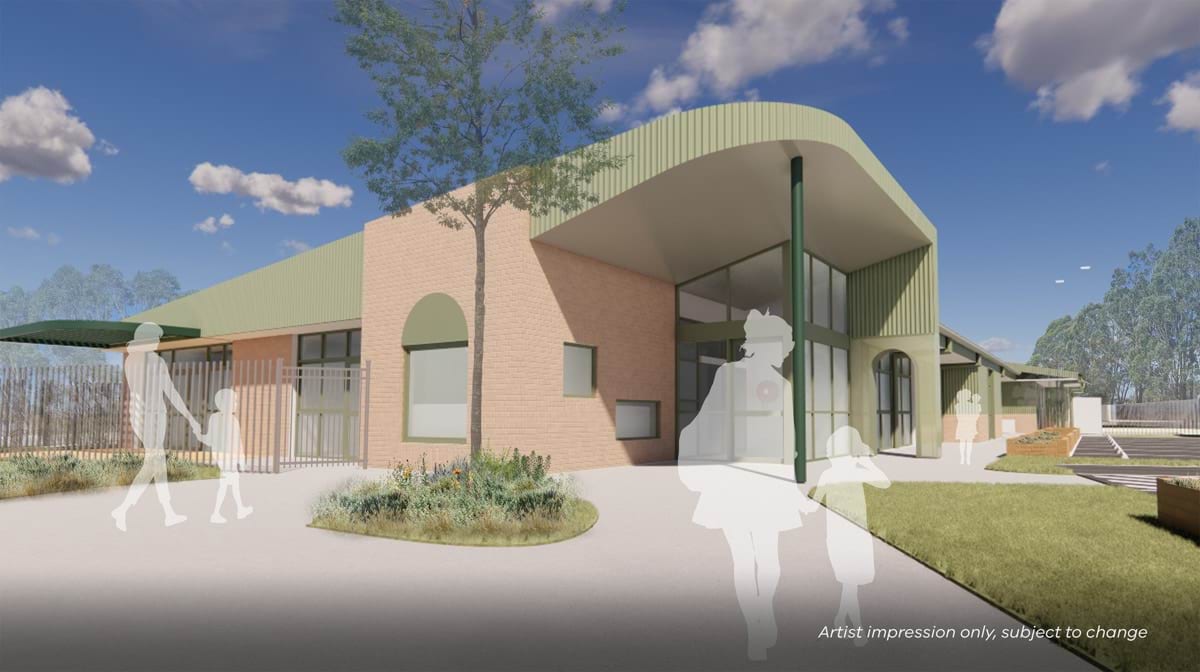
Our centre in Nicholson opens in early 2027. It’s run by Early Learning Victoria, a Victorian Government organisation. We will offer long day care and integrated kinder for up to 102 children each day. With 5 rooms built for different ages and designed for learning and play, your child will thrive here.
The centre also has:
- a consulting room for child and family services, such as maternal and child health and allied health
- a multi‑purpose room for community meetings and playgroups.
Does your organisation need a place to run programs? Express your interest in using a room.
Programs
We offer high quality childcare and kinder in Nicholson and District:
- Long day care (childcare): 102 places for children aged 0-6.
- Integrated kinder: Kinder plus long day care, offering flexible drop-off and pick-up within an 11-hour day.
Free Kinder
Free Kinder funding helps families pay for kinder. It covers:
- 3-year-olds: 5 to 15 hours per week
- 4-year-olds (Pre-Prep): 20 hours per week (increasing to up to 30 hours from 2031)
- Pre-Prep Priority Cohort: eligible families will receive up to 25 hours per week. To find out more about eligibility see here.
Free Kinder is available at both:
- Standalone (sessional) kinder programs: You don’t pay anything. Funding goes directly to the service and your child gets a free program.
- Long day care with integrated kinder programs (e.g., Early Learning Victoria): You get an annual offset, which is deducted from your fortnightly invoice.
How integrated kinder works with Free Kinder
- We run an integrated kinder program, led by a qualified early childhood teacher. Children learn through planned activities and experiences throughout the day.
- All 3- and 4-year-olds at our centre take part in the kinder program, even if they’re only enrolled in long day care. No matter when your child attends, they’ll benefit from high-quality learning experiences.
Save money with Free Kinder
- If your child is in our kinder program, you’ll receive an offset on your fees.
- If your child attends 2 or more days a week for the full year, you will get the full offset amount. If your child attends less than 15 hours a week, the offset will be adjusted based on their enrolled hours. The less time they attend, the lower the discount.
- To receive the Free Kinder offset at our centre, you must formally enrol in our kinder program. You can only claim Free Kinder at one service at a time. When you enrol, we’ll give you a form to sign to confirm this.
Ratios
All our centres comply with national standards for educator to child ratios:
- For babies and children under 3 years old: one educator for every 4 children.
- For children aged 3 years and above: one educator for every 11 children.
About the enrolment process
Find out more about the waitlist and enrolment process at Early Learning Victoria.
Updated